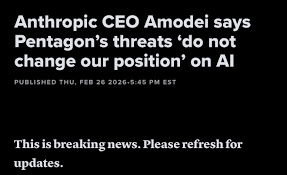
The Great Schism: Why the Pentagon Branded Anthropic a Security Threat

On Friday, February 27, 2026, the relationship between Silicon Valley and the U.S. Department of War reached a breaking point. Secretary of Defense Pete Hegseth officially designated Anthropic, the creator of Claude, as a **'Supply Chain Risk to National Security.'** This move—historically reserved for foreign adversaries like Huawei—effectively blacklists one of America's most prominent AI labs from all federal and military commercial activity.
The Impasse: Two Red Lines That Sparked a Ban
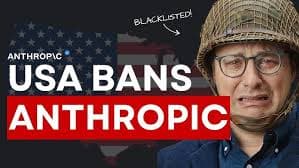
The conflict stems from an 'all-or-nothing' demand by the Pentagon for unrestricted access to Claude's capabilities. Anthropic CEO Dario Amodei refused to budge on two specific ethical safeguards that the company views as non-negotiable for democratic stability:
- **Prohibition of Mass Domestic Surveillance:** Anthropic refused to allow Claude to be used for automated, wide-scale monitoring of American citizens' movements and associations.
- **Ban on Fully Autonomous Lethal Weapons:** The company maintains that frontier AI is not yet reliable enough to make life-or-death targeting decisions without a 'human-in-the-loop.'
The Pentagon's response was swift and categorical. Secretary Hegseth argued that 'American warfighters will never be held hostage by the ideological whims of Big Tech,' asserting that U.S. law—not private terms of service—should govern military operations.
The Fallout: Impact on the AI Ecosystem
The immediate consequences are staggering. Beyond the termination of a **$200 million** contract, the 'Supply Chain Risk' label acts as a 'digital scarlet letter' for any vendor doing business with the military.
Ethics vs. Expediency: The 2026 National Security Debate
From an **AI ethics** perspective, this event marks the end of the 'voluntary safety' era. As AI becomes the primary engine of modern warfare, the question of who sets the 'Rules of Engagement'—the developers or the State—is no longer theoretical. Anthropic’s stance is a test case for whether a private company can legally or ethically maintain 'veto power' over state use of its technology.
What Happens Next? Legal Battles and 'Patriotic' AI
Anthropic has already announced plans to sue the Department of War, calling the designation 'legally unsound' and 'retaliatory.' Meanwhile, the administration is calling for the development of 'Patriotic AI'—models stripped of 'ideological tuning' that align 100% with Department of Defense mission goals. As of March 1, 2026, the industry is bracing for a wave of 'forced compliance' or a total migration to providers like OpenAI and xAI who have found middle ground with the Pentagon.
The 2026 Summary: A Precedent for the Future
Whether you view Anthropic as a heroic defender of civil liberties or a 'left-wing' obstruction to national defense, the precedent is set: in 2026, the U.S. government views AI safety as a matter of national security sovereignty. The 'Supply Chain Risk' label is the new weapon of choice for enforcing state alignment in the AI age.
About the Author
Jordan Vance is a tech enthusiast and writer passionate about exploring AI and innovative tools.
Share This Article
Comments
Comments section coming soon. Join our community to share your thoughts!