
The 25% Reality: AI's Accelerated Impact on Global Employment

As of March 2026, the theoretical 'threat' of AI has materialized into a measurable economic shift. Recent data from the ILO and major financial institutions like Goldman Sachs suggests that roughly **25% of current work tasks** are now fully performable by advanced AI agents. While the headline unemployment rate remains relatively stable at 4.9%, beneath the surface, the composition of the workforce is undergoing its most violent restructuring since the Industrial Revolution.
Sectors in the Crosshairs: Who is Most Exposed?
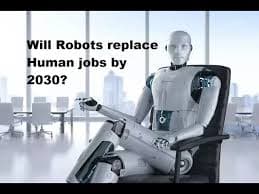
The impact of AI in 2026 is not felt equally. Unlike previous waves of automation that targeted manual labor, this 'Intelligence Wave' is primarily disrupting cognitive, administrative, and managerial roles. In advanced economies, up to 60% of jobs have some exposure, but the 25% replacement figure specifically targets roles where tasks are 'codifiable' and routine.
- **Administrative & Office Support (26% risk):** Data entry, scheduling, and basic bookkeeping are being swallowed by autonomous agents that operate 24/7 with near-zero error rates.
- **Customer Service (20% risk):** AI 'avatars' now handle 70% of first-tier support queries with high emotional resonance, reducing the need for large human call centers.
- **Legal & Financial Research (15-18% risk):** Document review and paralegal research tasks that used to take weeks are now completed in seconds by LLM-driven forensic tools.
The 2026 Layoff Wave: Not Just a Tech Problem

In the first two months of 2026 alone, over 30,000 tech jobs were cut, with a significant portion of companies explicitly citing 'AI-driven restructuring' as the cause. Giants like Amazon, Microsoft, and Salesforce have pivoted to an 'AI-First' structure, cutting mid-level management and support roles to fund massive infrastructure bets.
The 'Stepping-Stone' Crisis: Impact on Youth
One of the most concerning trends in March 2026 is the erosion of entry-level roles. IBM and other enterprise leaders have noted that the 'junior' tasks that once served as training grounds for new graduates are now done entirely by AI. This has led to a 13% decline in employment for workers aged 22–25 in high-exposure fields, creating a 'skills gap' where there are no rungs left at the bottom of the career ladder.
Conclusion: A Productivity Boom with a Human Cost
The paradox of 2026 is that while AI could increase global GDP by 7% due to massive productivity gains, the transition is far from smooth. The '25% replacement' isn't just a statistic; it represents a fundamental change in how humans provide value. For those in exposed industries, the focus must shift from 'doing the work' to 'directing the AI' that does it.
Summary of 2026 Forecast
As we head into the second half of the year, expect more firms to move from 'AI testing' to 'AI-led hiring.' The jobs that survive will be those requiring deep empathy, complex physical dexterity, or high-stakes accountability—traits that, for now, remain uniquely human.
About the Author
Jordan Vance is a tech enthusiast and writer passionate about exploring AI and innovative tools.
Share This Article
Comments
Comments section coming soon. Join our community to share your thoughts!